
In April 2025, the Japanese telecommunications giant NTT Group the first successful test of an innovative lightning strike protection system using Unmanned Aerial Vehicles (UAVs). The technology, developed through joint research by NTT, Osaka University, and the National Institute of Information and Communications Technology (NICT), offers a mobile alternative to traditional tall lightning rods.
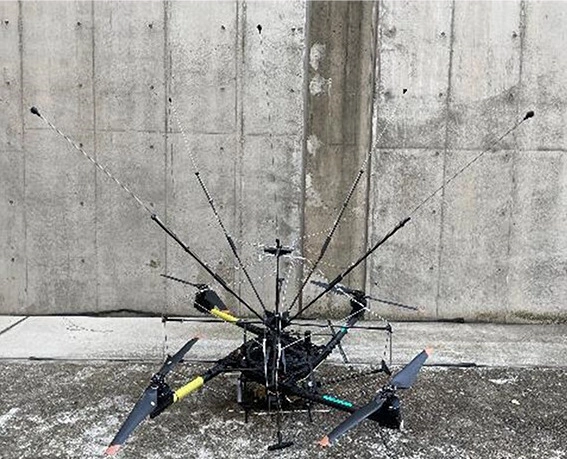
Lightning-resistant drone
How does this work?
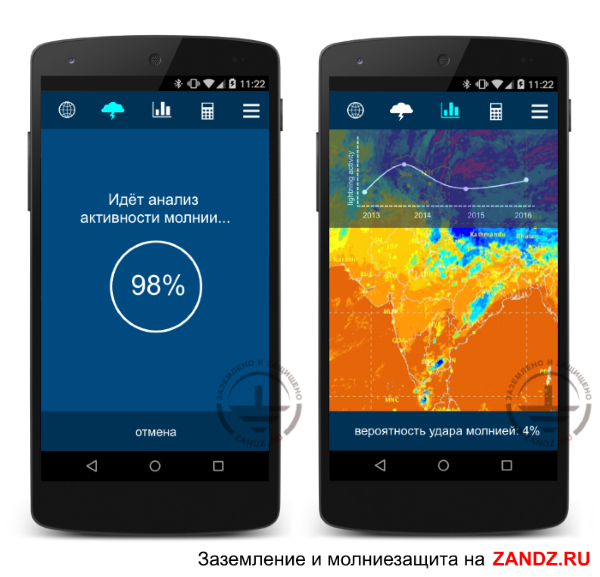
Detection:: A network of ground-based sensors detects pre-storm activity and forecasts a potential lightning strike zone.
Launch: A drone is deployed over the threat area to an altitude of 300 meters.
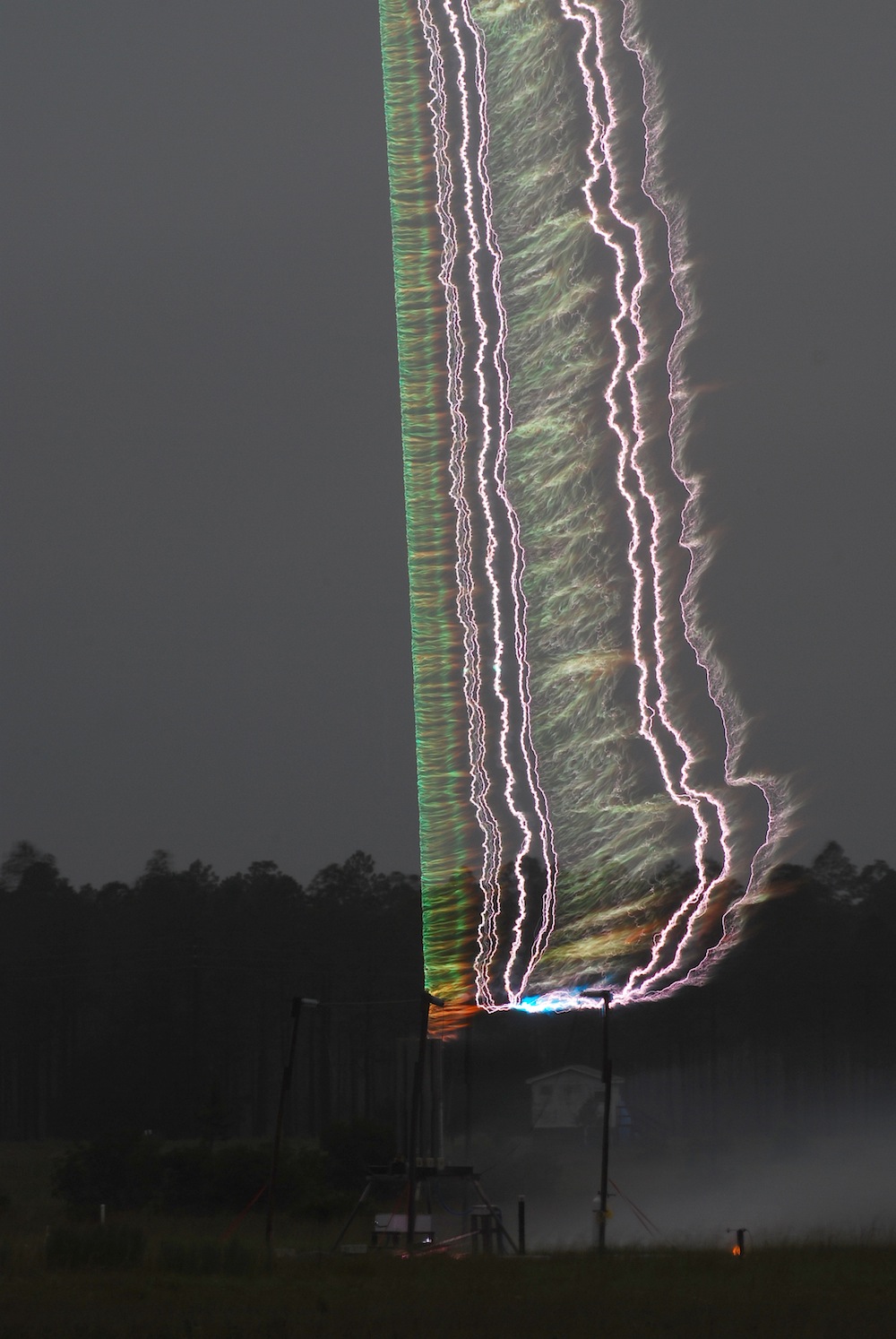
Channel Formation: Using electrodes mounted on the drone, a high-voltage pulse is generated, which ionizes the air. This creates a low-resistance plasma channel extending from the drone to the ground. The channel becomes the preferred path for the lightning discharge.
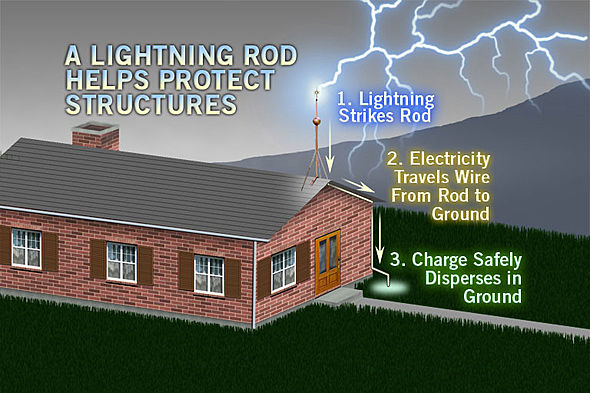
Lightning Interception: The lightning is "intercepted" at a safe height and directed to the ground via a down conductor connected to a ground terminal, bypassing the protected structure.
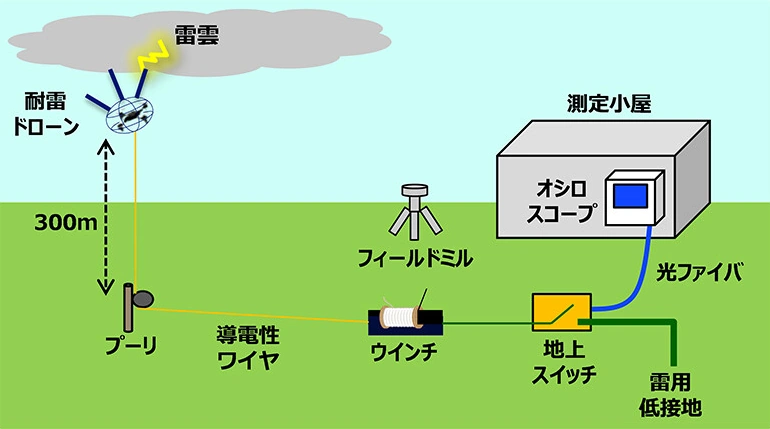
The scheme of operation of the lightning protection system with an unmanned aerial vehicle
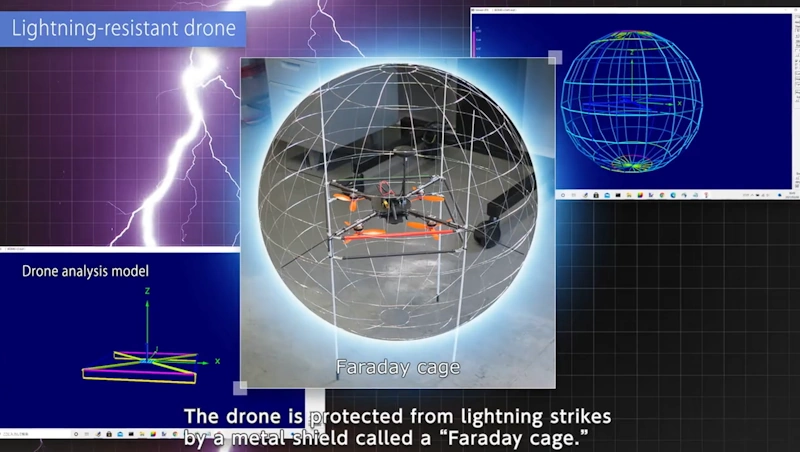
The drones are equipped with a Faraday cage, ensuring the lightning current does not reach the UAV's body and disable it. Thus, a drone that has intercepted a lightning strike can continue its operation during prolonged thunderstorms.
Development prospects
Development prospects
NTT's ambitious goal is to create invulnerable drone lightning rods. They must instantly arrive at predicted epicenters of storm activity, trigger the lightning discharge, and direct it to safe zones, protecting cities and people. The future R&D will focus on improving the accuracy of strike location prediction and refining mechanisms for reliable lightning interception by drones. Concurrently, research is underway on capturing and utilizing the energy from induced discharges—a unique opportunity to turn the power of thunderstorms into a resource.
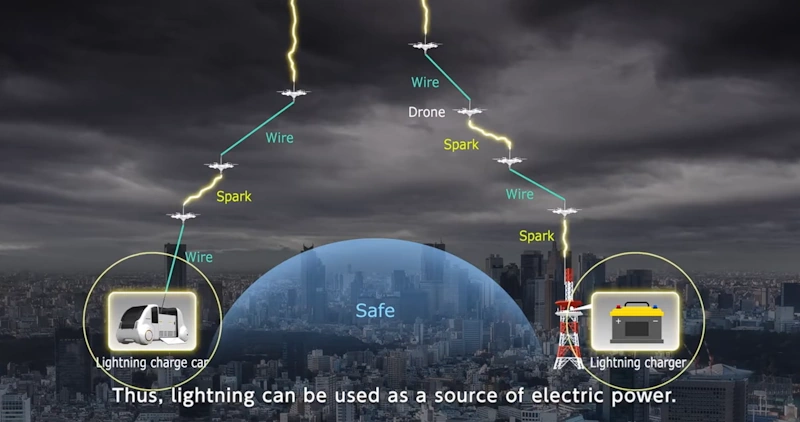
In the future, drones will be used to protect cities from lightning and to store lightning energy.
Related Articles: