


Initial data for the grounding system design:
- Object: Heat Exchange Station, located on the territory of the MPP;
- Object location: Yakutsk Region;
- Heat Exchange Station dimensions: 19.5x21 m;
- vertical steel reservoir height: 10.8 m;
- soil resistivity: 1000 Ohm*m.
General data
The technical solutions adopted in design documents comply with the requirements of environmental protection, sanitary and hygienic, and fire safety, as well as other standards effective in the territory of the Russian Federation, and provide operation of the facility in a way safe for the lives and health of people while complying with the events provided for by design drawings. Design documentation complies with the requirements of the effective regulatory documents.
This section discusses the solution for lightning protection and grounding of a Heat Exchange Station for a Mining and Processing Plant (MPP) located in the Yakutsk Region.
According to the "GUIDELINES FOR ARRANGEMENT OF LIGHTNING PROTECTION OF BUILDINGS, STRUCTURES, AND INDUSTRIAL UTILITIES" SO 153-34.21.122-2003 , the object is classified as "ordinary," and according to the "GUIDELINES FOR ARRANGEMENT OF LIGHTNING PROTECTION OF BUILDINGS" RD 34.21.122-87, it falls under "Category III". The required lightning protection system must be at least 0.9
According to SO 153-34.21.122-87, item 3.3.1, lightning arresters should be chosen using the respective software capable of calculating the protection zones or the probability of the lightning strike into the facility (or a group of facilities) of any configuration, with the random position of almost any lightning arrester.
In addition to SO 153-34.21.122-2003, the "RECOMMENDATIONS FOR OPERATIONAL AND TECHNICAL DOCUMENTATION, PROCEDURE FOR ACCEPTING FOR OPERATION AND OPERATION OF LIGHTNING PROTECTION ARRANGEMENTS" state:
When checking the protection reliability using software, computer calculation data shall be provided in the form of a summary of design options, and a conclusion on their effectiveness shall be formed.
The reliability calculations of the lightning protection system were performed in accordance with Technical Circular No. 25/2009 of the ROSELEKTROMONTAZH Association "ON THE USE OF THE SPECIALIZED SOFTWARE FOR CALCULATIONS OF EFFICIENCY OF THE PROTECTIVE EFFECT OF THE LIGHTNING ARRESTERS," which states:
When designing an external lightning protection system for objects, it is recommended to follow the following:
For the optimal construction of protection zones for buildings and structures of complex shape, with roofs of different heights, protruding spires, towers, variable geometry, buildings taller than 150 m, building complexes, and other complex objects, appropriate software products should be used, for example, the "Program for calculating the effectiveness of rod and wire lightning arresters using a statistical method" developed by OAO ENIN.
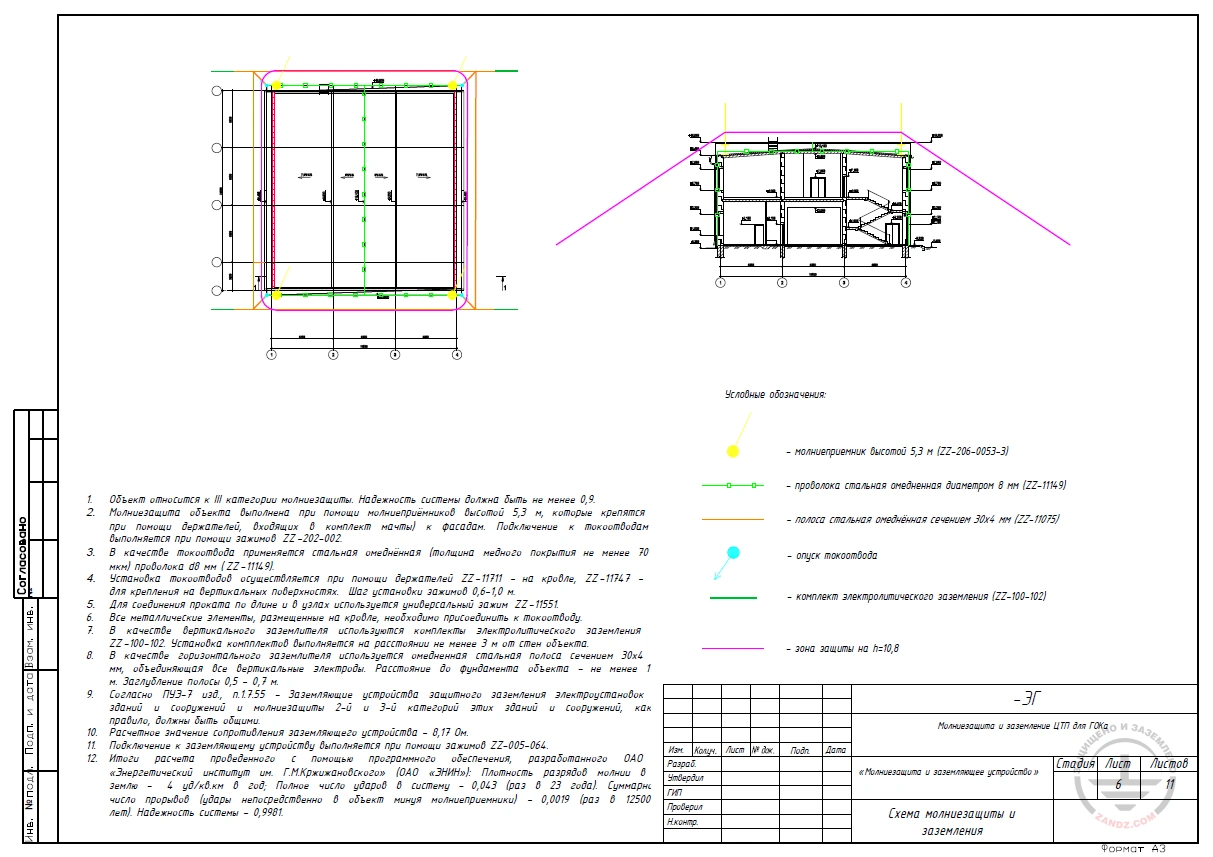
The object's lightning protection is implemented using 4 lightning protection system (LPS) masts, 5.3 m high, installed on the object's facades.
In accordance with RD 34.21.122-87, Table 1, the protection zone for the object is Zone B.
According to EIC-7th ed., clause 1.7.55 - Grounding arrangements for protective grounding of electrical installations of buildings and structures and lightning protection of categories II and III of these buildings and structures, as a rule, must be common.
The resistance of the grounding arrangement should not exceed 10 Ohm.
Materials and cross-sections of all conductors used in the design comply with the requirements of GOST R 50571.5.54-2013 and the EIC Rev. 7, including new information introduced by Technical Circulation No. 11 of October 10, 2006.
The protocol generated based on the results of the lightning protection system reliability calculations is provided in Appendix 1 to the project in a PDF file.
Calculation of the Grounding Arrangement Resistance
The set ZZ-100-102 resistance::

Where C is a dimensionless coefficient describing the electrolyte content in the surrounding soil, 0.125;
ρ is the equivalent soil resistivity, 1000 Ohm·m;
L is the length of the vertical electrode, 2.4 m;
d is the diameter of the vertical electrode, 0.065 m;
T is the depth - distance from the ground surface to the grounding electrode, 0.6 m;
Resistance of a horizontal electrode:
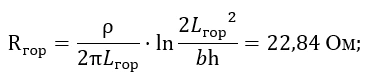
Where ρ is the soil resistivity, 1000 Ohm·m;
b is the width of the horizontal electrode, 0.03 m;
h is the depth of the horizontal conductor, 0.5 m;
Lhor is the length of the horizontal electrode, 98 m.
Full resistance of the grounding arrangement::
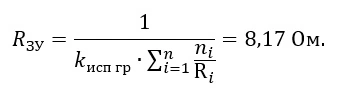
Where n is the number of sets, 4 pcs.;
kutil is the utilization factor of the horizontal grounding electrode, 0.7;
kutil the utilization factor of the grounding sets, 0.95
The calculated resistance of the grounding arrangement is 8,17 Ohms, which meets the requirements of EIC, clause 1.7.101, GOST R 59789-2021, clause 5.4.1.
Calculation of the Protection Zone in accordance with SO 153-34.21.122-2003:
h = 14.8 m;
Cone height according to SO Table 3.4:

Cone radius according to SO, Table 3.4:

To provide the protection zone with the required reliability, radius rx at the height hх = 10,8 m is determined as follows:

Distance between lightning protection system (LPS) masts (maximum):
L = 22 m;
Limit distance between lightning arresters according to SO, Table 3.6:
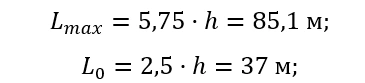
The sag height of the protection zone is absent.
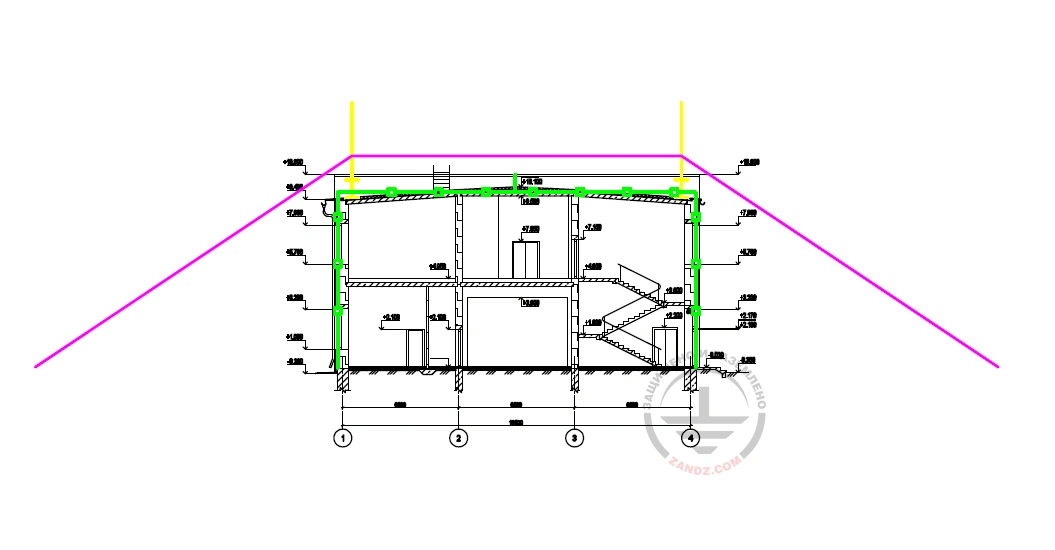
Layout of grounding and lightning protection elements of the Heat Exchange Station on the territory of the MPP
Specifications
The lightning protection of the facility is only provided when using ZANDZ lightning arresters having heights determined by calculations, names and product numbers of which are as stated in the specifications and the commercial proposal.
Appendix: design in DWG and PDF formats
Need a design of earthing and lightning protection? Order now by contacting the ZANDZ.com Technical Center!
Need more information on this calculation? Ask in comments under this page!
Related Articles:
 Webinar «Unique features of lightning protection in mountainous areas», page 1
 Lightning protection for the rotating equipment
 Reasonable laziness is not a vice in practical lightning protection. E. M. Bazelyan
 Calculation Example for Lightning Protection and Grounding of a Workshop Located in a Gravelly Soil of 3,000 Ohm*m