

A new article on the issues of the grounding arrangement design in cities is published at out website.
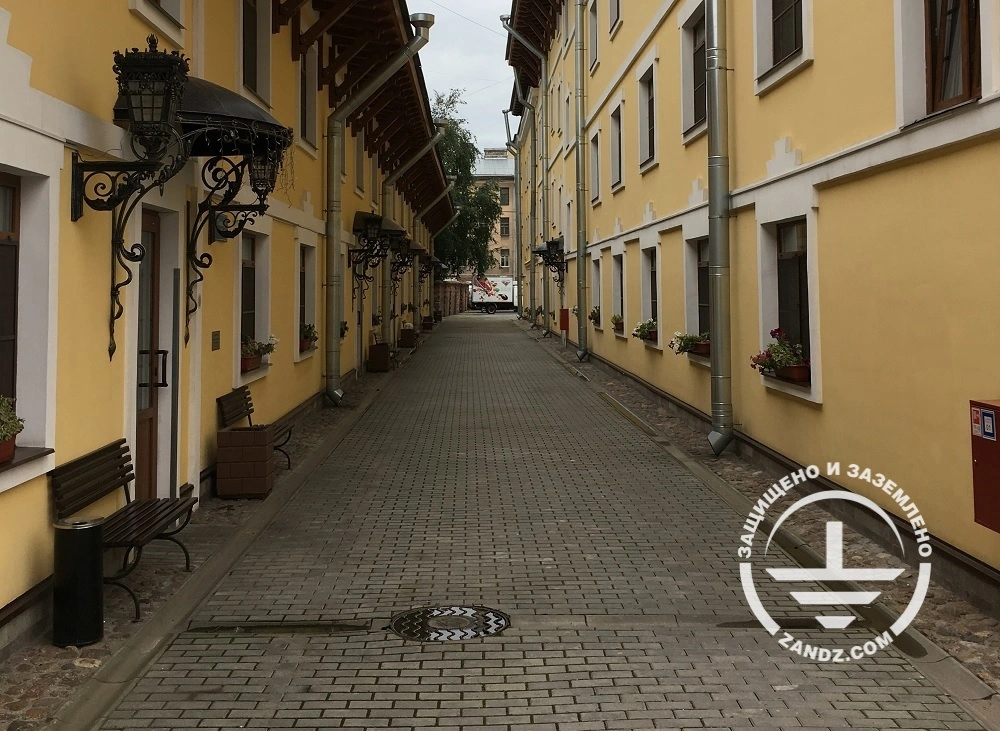
The lack of free space is the main challenge in creating grounding arrangements in cities. Adjacent areas are usually covered with asphalt or occupied by infrastructure. Even available areas with natural soils such as flower beds and lawns are significantly limited in space. The dense network of underground utilities (such as pipelines, cables, or tunnels) which, according to technical standards, prevent the possibility of close location of grounding elements is an additional barrier to this. Even large-scale earthwork at the design stage does not ensure that this task will be solved. However, even under such conditions, the designer still has several options.
The article examines the following key approaches:
- using natural lightning arresters if the grounding arrangement is used as part of the external lightning protection;
- deep-laid modular grounding electrodes: compact installation and reduced resistance through water-bearing layers;
- soil replacement: using coke fines to reduce the area of the grounding arrangement;
- electrolytical grounding electrodes: 8-12 times reduced resistance in permafrost or high-Ohmic soils.
Read the separate page to learn how to adapt these methods to your designs and ensure safety in a city.
Related Articles:
_thumb.webp)
