

With the development of high-rise construction and the increase in the amount of engineering equipment on building rooftops, the issue of effective lightning protection becomes particularly significant. Modern roofs are no longer just a covering; they are technological platforms packed with sensitive devices. They not only make our lives easier, providing comfort and safety, but are also vulnerable to the forces of nature, in particular, to lightning.
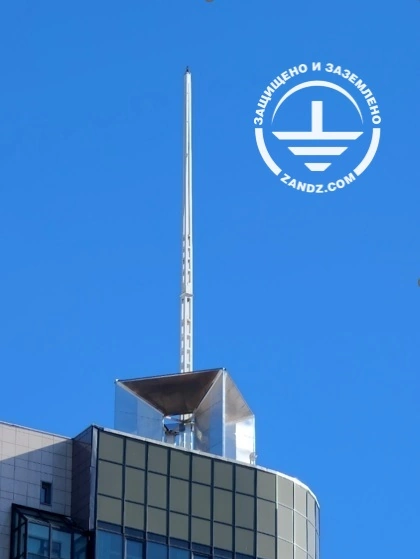
Equipment installed on the roof most often rises above the building's elements. Ventilation and air conditioning units, smoke exhaust systems, communication antennas, solar panels, and video surveillance systems—all are located in a high-risk zone. The stoppage or failure of even one of these systems results not only in losses but also in a direct threat to people's lives. If a smoke exhaust system shuts down at a critical moment, the consequences can be tragic.
It is important to understand: lightning is not only a direct threat of destruction. Even if the discharge does not strike the equipment directly, it can induce dangerous currents and voltages in metal structures and utilities, leading to breakdowns and equipment failure. Therefore, it is necessary to provide comprehensive protection – both from direct strike and from the secondary effects of lightning.
Fundamentals of Lightning Protection
Lightning protection is divided into external and internal. The external system is what intercepts the discharge and diverts the current to the ground. The internal system protects electrical and data circuits from overvoltages and induced surges. All these measures are regulated by strict normative documents: RD 34.21.122-87, SO 153-34.21.122-2003, and GOST R 59789-2021.
Choice of lightning protection system and features of protection zone calculation
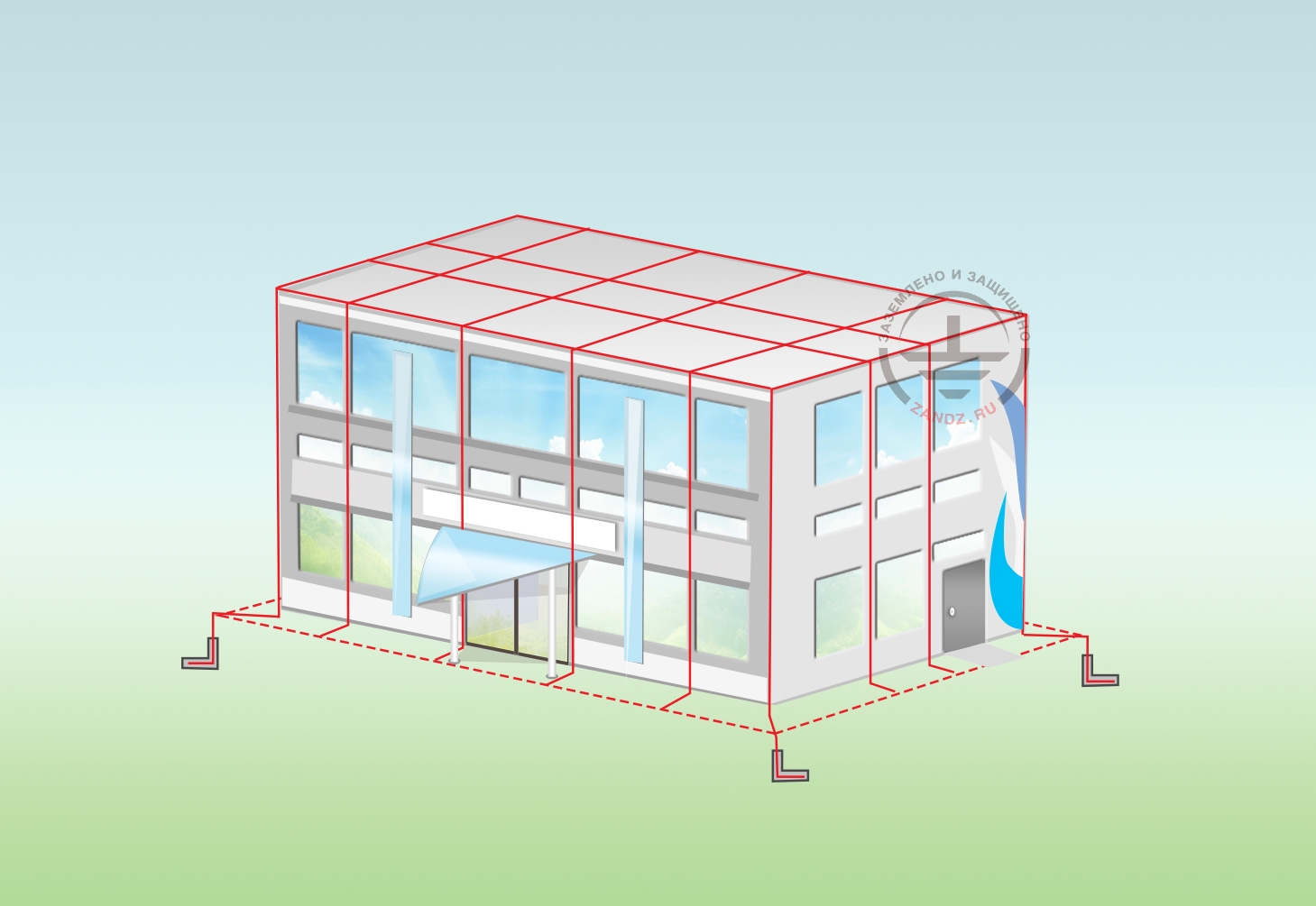
Rod, catenary wire, mesh, and natural lightning rods—each of these types has its place in the protection system. However, when designing protection for equipment on rooftops, preference is most often given to rods and natural lightning rods. Mesh structures mainly protect the underlying levels, and catenary wires are rarely used due to complexities with wind and ice loads.
The calculation of protection zones is one of the design stages. According to RD 34.21.122-87 and SO 153-34.21.122-2003, protection zones are formed with reference to the ground level. This means that on tall buildings, lightning rods must have a significant height. For example, to protect equipment 1 meter high on a 100-meter building, a mast over 11 meters high would be required. But such a height of the LPS often contradicts architectural requirements.
Here, a probabilistic approach comes to the rescue. Using a statistical methodology, available as a free service on our website, allows justifying a reduction in the height of lightning protection systems without compromising the reliability of protection. This tool is certified and officially recognized.
There is another way—the protective angle method, fixed in GOST R 59789-2021. It is simpler to apply and is oriented towards the height relative to the roof, not the ground. However, this approach is inferior in terms of reliability. It does not take into account the full range of factors influencing lightning development and therefore cannot be recommended as the sole criterion. A comparison of the requirements of various normative documents regarding protection zones was discussed in one of our webinars.
Natural Lightning Rods
A building's own structures can serve as lightning protection. Metal towers, masts, technological racks, railings—all these elements can perform the function of lightning rods. Their advantage is that they do not disrupt the architectural appearance of the building while providing a sufficient level of protection. It is important to remember that they must satisfy the requirements of normative documents regarding minimum metal thickness, cross-section, and reliability of connections between themselves and the down conductors.
Internal Protection: How to Protect Against Secondary Effects
A lightning strike is not the end of the story. It is important to understand that even if the lightning rod reliably intercepted the discharge and safely diverted the current to the ground, this does not eliminate the occurrence of secondary hazardous effects. Induced impulses and overvoltages can penetrate electrical circuits, damage sensitive equipment, and cause system failures. Protection against induced impulses and overvoltages requires the application of special internal lightning protection measures. For this purpose, Surge Protective Devices (SPDs) are used. They are mandatory on power inputs and signal lines.
It is important to remember that the effectiveness of SPDs is closely related to the quality of the grounding. The closer the grounding arrangement is to the SPD and the more reliable the connection, the more effective the protection. In addition to this, shielding of sensitive lines and systems, as well as equipotential bonding, is necessary to avoid damage due to potential differences between different equipment elements.
Conclusion
Lightning protection of engineering equipment on the roof is not a formal checkbox in the project documentation. It is a matter of people's safety, the preservation of expensive systems, and the fail-safe operation of the building.
Tall lightning rods are effective but not always architecturally possible. The statistical methodology provides flexibility in design, and SPDs with proper shielding save equipment from secondary consequences.
The ZANDZ Technical Center is ready to help you select the optimal protection scheme, perform calculations, and support the project at all stages. Lightning can and must be tamed—and we know how to do it.
Related Articles:
 Protection of Fuel and Lubricant Materials (FLM) Storages with Floating Roofs Against the Static Electricity
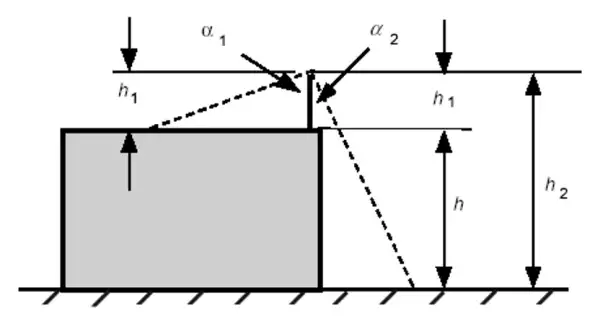 Lightning Arrester on the Roof. How to Measure Its Height?
 Should We Consider Adjacent Buildings When Calculating Lightning Protection?
 Types of air terminals: mast, cable wire and mesh cage