

Э. М. Базелян, д.т.н., профессор;
признанный отечественный Эксперт в области заземления и молниезащиты
Лень закономерно считается едва ли не самым распространенным пороком человека. Бессчетное количество поговорок и сказок бичуют лень.
“Лень, открой дверь, горим! Сгорю, не отварю”
Ну, а если говорить о лени разумной? Так ли уж она вредна в практике инженера? Постановка такого вопроса вполне правомочна и достаточно обоснована. По сути дела, речь идет об отказе от бессмысленной работы, затратной, вполне наукообразной, но не способной улучшить техническое решение. Вот вполне очевидный пример.
.webp)
С какой целью рассчитывать сопротивление заземления электрода с точностью до третьего, а то и четвертого знака после запятой, если удельное сопротивление грунта удается измерить с погрешностью порядка 10%? Затрата компьютерного времени на расчет явно бессмысленная. Улучшить качество проекта она не способна. Разумная леность здесь явно на пользу. Она позволяет избежать бесполезную работу при проектировании, весьма весомую по времени и материальным затратам, если исходные данные для проектирования не слишком достоверны.
Идея написать эту статью возникла у фирмы ZANDZ после письма одного из читателей материала о длинных подземных и наземных коммуникациях, что был размещен на сайте. Там демонстрировалась целесообразность полного отказа от работы на таких коммуникациях в грозовой обстановке. С этой целью демонстрировалась возможность реальной опасности фибрилляции сердца даже при ударе в коммуникацию самых слабых молний с предельно малым током. Ни на что большее статья не претендовала. В частности, там был не нужен, а потому и не затрагивался вопрос о влиянии формы импульса напряжения, доставленного по коммуникации, на опасность гибели человека за счет фибрилляции. В задачу статьи попросту не входило решение подобной задачи. Достаточно было знать, что напряжение это весьма низкое и только. А на нет и суда нет.
Вот как они представлены в нормативном документе, оценивающем опасность фибрилляции.
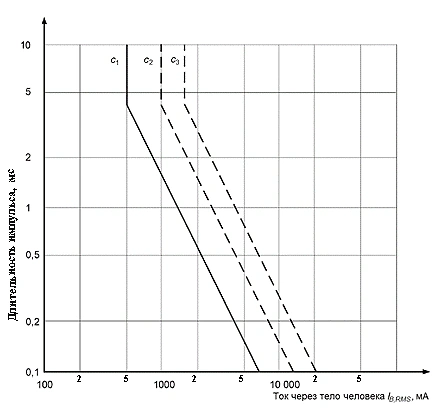
Можно видеть, что конкретных расчетных точек на графиках нет, масштаб по осям логарифмический, что уже само по себе указывает на не слишком высокую достоверность данных. Рассмотренный временной диапазон не опускается ниже 100 мкс. Этого явно не хватает для оценок при микросекундной длительности, типичной для грозовых перенапряжений. В подобных условиях нет смысла оперировать иным временным параметром, кроме полной длительности импульса. Претендовать на большее исходные данные просто не позволяют. Реальная форма воздействующего импульса в нормативном документе даже не упомянута и узнать ее негде. Если инженер без меры активен и разумная леность ему не свойственна, он может придумать нечто свое собственное, например, оценивать полную длительность воздействующего импульса как частное от деления перенесенного заряда на амплитуду тока – красиво и вполне наукообразно! А можно принять и другой метод оценки, скажем, опираться на длительность изменения импульса от нуля через максимум до половины амплитудного значения. Тоже ничем не хуже. Возможны и многочисленные иные варианты. Дело в фантазии расчетчика. Естественно, каждый из вариантов приведет к своему собственному значению опасного напряжения. Избежать этого нельзя. Конкретной обусловленности расчета препятствует неопределенность исходных данных, что на рисунке. Из них большего не извлечешь. А в таких условиях лень вряд ли становится серьезным недостатком. По какому параметру длительности импульса не шел бы расчет, порядок уровня опасного воздействия будет определен достоверно. А на большее представленные исходные данные просто не претендуют. Ни для чего иного они и не предназначены. Это нужно очень твердо запомнить и не уточнять то, что уточнению не поддается. По сути дела, исходные данные на рисунке пригодны исключительно для качественного решения.
Если же вы все-таки нацелены на уточнение, не ленитесь поставить вопрос иного плана, - с какой целью оно планируется? Чаще всего это требуется для оценки частоты опасного воздействия. И здесь снова полезно стать разумно ленивым. Оценка частоты опасного воздействия требует достоверного знания величины опасного тока. Его расчет далеко не всегда прост. Не спешите приступать к нему и произведите сначала по лени самую грубую оценку. Если величина опасного тока лежит в окрестности сотни киллоампер, дело того стоит. Здесь даже двукратное изменение тока меняет вероятность его появления в пределах порядка величины. Ну а при малых токах молнии, скажем, в десятые доли среднего значения, вероятность опасного события изменится разве что на десятки процентов. Нет смысла бороться за такое уточнение, тем более, не слишком и достоверное. Пусть ваша разумная лень поможет избежать мало эффективных, но объемистых затрат машинного времени на уточненный расчет тока, а вас уведет от компьютера на прогулку по свежему воздуху.
Так разумная лень поможет сберечь ваше здоровье.
Смотрите также:
 В каких случаях молния может поджечь газовую смесь? Э. М. Базелян
 Защита информационных и коммуникационных систем
 Молниезащита телекоммуникационного оборудования на вышке: изолированный токоотвод или естественные металлоконструкции
 Подземные коммуникации несут опасность при ударе молнии! Э. М. Базелян